
Solutions come from the leaders and organizations closest to community.
Grassroots organizations are built by people directly affected by the issues they aim to solve. These organizations grow from people fighting for access to maternal health services for Black mothers, meeting the need for culturally relevant services for immigrants, providing gender affirming care for our trans neighbors, and answering the call for so many other unmet needs in our community. They ground their practices in trust, relationships, and lived experience.
This deep connection to community means grassroots organizations respond to immediate needs while also building towards long-term social and systemic change. These nonprofits are not supplementary to systems — they are a primary infrastructure through which justice can be sustained.
As a funding organization dedicated to health equity and stronger communities, Waters Meet recognizes and seeks to center and uplift grassroots organizations through our relationships and resources. Specifically, we prioritize by-and-for, grassroots organizations that were founded in and remain deeply connected to the communities they serve.
Movement and flow
It can be helpful to imagine communities, grassroots organizations and social justice movements working together as a river system. Grassroots nonprofits — and the movements they are born of — flow and intertwine as they carve a path to a more just future.
We can be moving toward the same future, and the water we’re moving through is not the same. Some of us are navigating rapids, some of us are in still water, and sometimes, the current pushes us into each other.
Along that path, movements must respond to and overcome the landscape and obstacles they flow through. Some areas are smooth and steady; some are rocky and fast; some are shallow; some are deep and slow-moving.
Much of the terrain our grassroots organizations navigate is man-made realities, erosion of banks, poisons, and dams. These are the systemic realities we navigate to build healthy water ways that serve the greater good and overcome the forces of resistance to justice and equity.
What we know, and what research backs up, is that grassroots organizations are more effective at meeting community needs because they are of community. For example, during crises such as COVID-19 in Spokane County, grassroots organizations responded immediately to meet community needs while formal systems struggled to adapt. This pattern reflects a broader truth: communities most impacted by systemic inequities have always created their own systems of care.
They understand cultural context, they build trust, and they respond to the whole person, not just a program requirement. When it comes to change, grassroots organizations don’t just provide services; they build power. That power is what shifts policy, priorities, and ultimately outcomes.
Confluence and connection
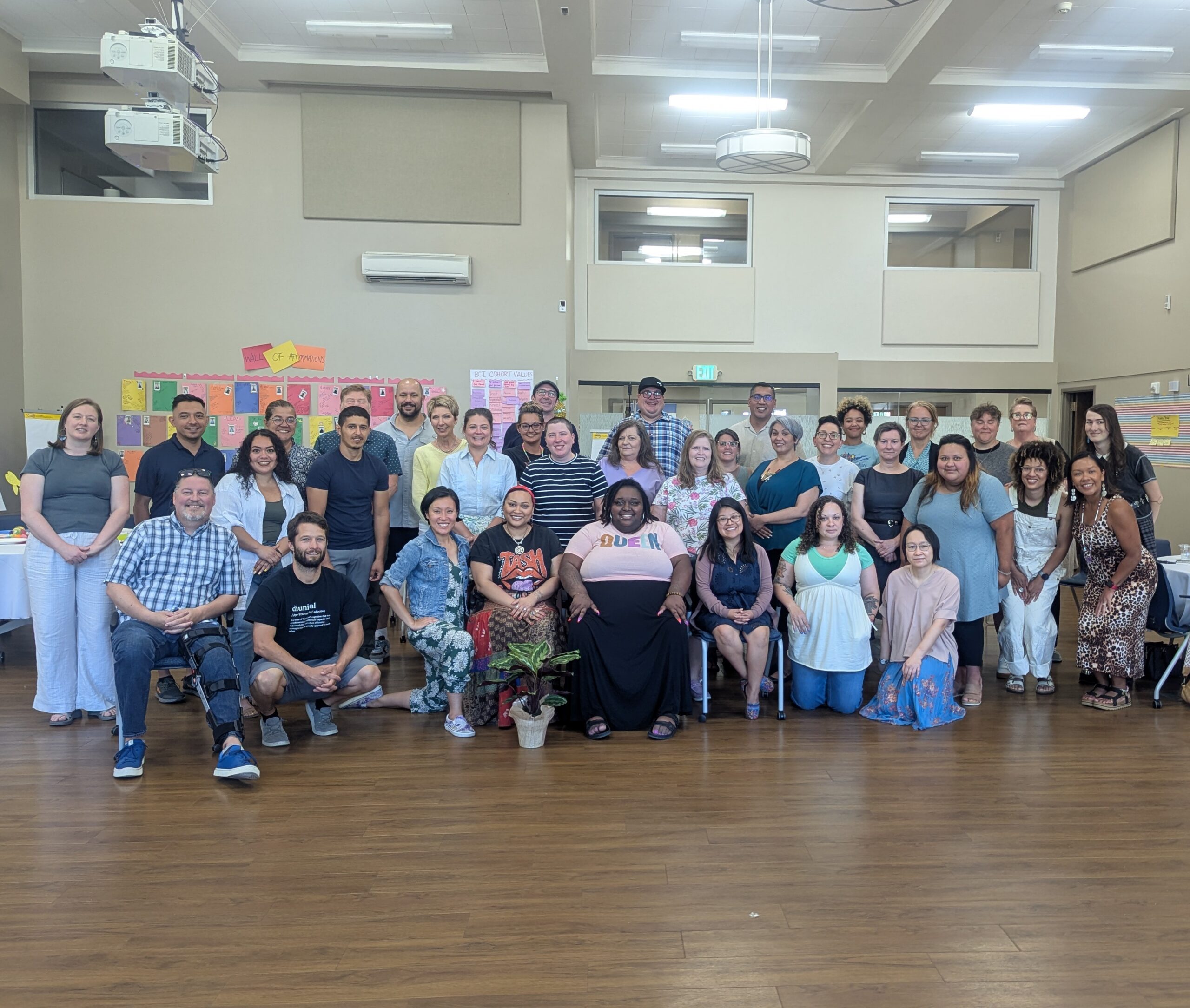
While grassroots organizations are best equipped to address community needs, they also must have their own needs tended to and supported. This recognition is central to Waters Meet’s work through the Building Connections Community.
This community effort of 20 by-and-for grassroots nonprofits intends to honor and resource the work of our nonprofit community. Through supports including healing communities and resources, shared nonprofit infrastructure, spaces to share collective wisdom, and political advocacy, we seek to build up and sustain the existing power of the nonprofit community in eastern Washington.
It can be hard to see when we are in the water, navigating together. But, if we stay in the water longer, we can build something that can actually hold us. We do this by remembering our shared values, recognizing the value in diverse approaches, and committing to supporting each other. Our grassroots organizations provide a place to organize, address harms, find community-developed solutions, and envision beautiful futures.
Let us wade in the water by staying involved; do not step in only when it is urgent. Stay present. Be in relationship even when it is uncomfortable or unclear. Care for each other, not just in crisis, but consistently. These truths are what can sustain our grassroots organization ecosystem and bring our communities to a better way of being.
lu hill is the Community Engagement and Strategy Director for Waters Meet.
If you’re interested in learning more about our approach to health equity and building stronger communities alongside grassroots organizations, please check out our 10-Year Strategic Direction.